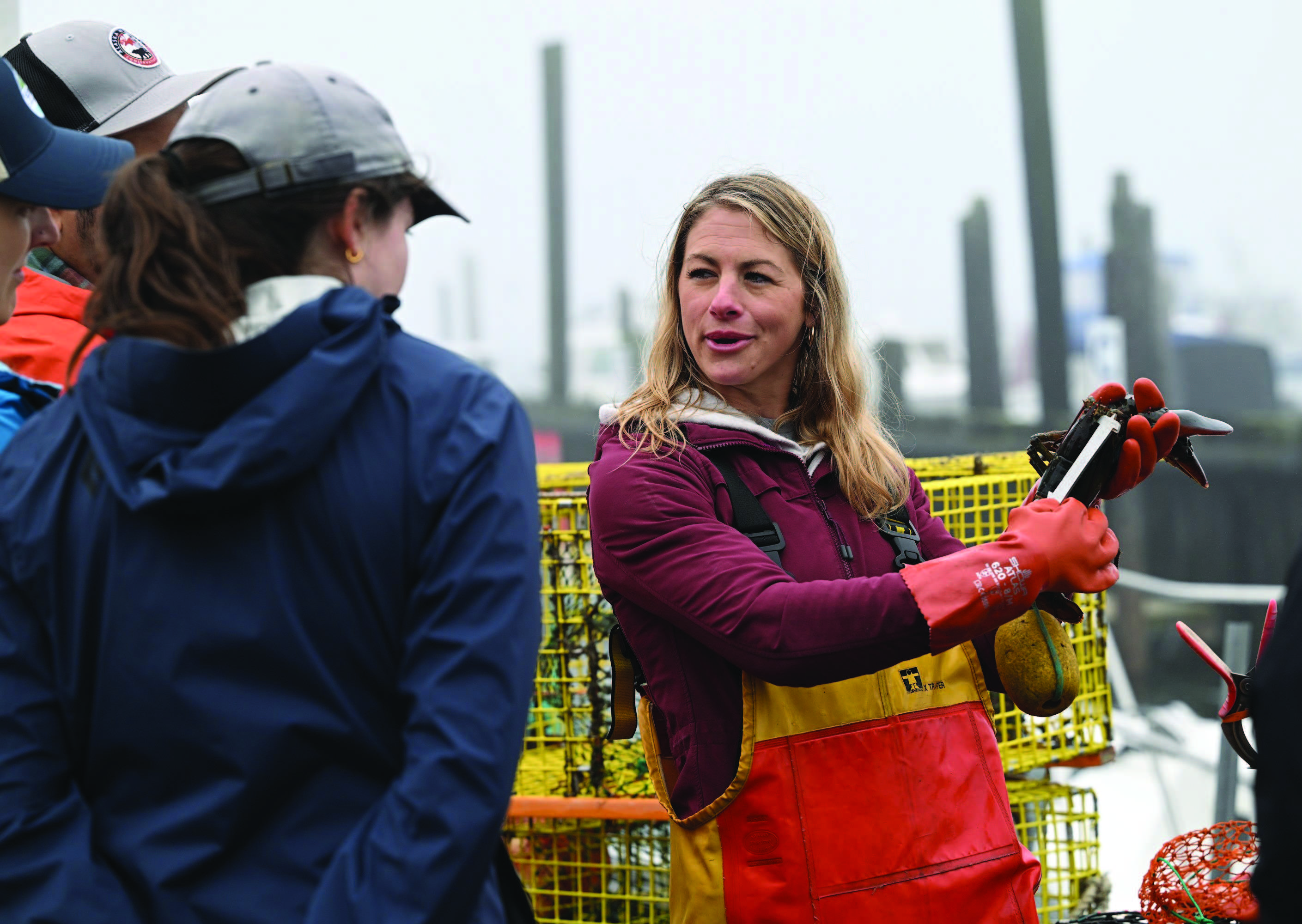
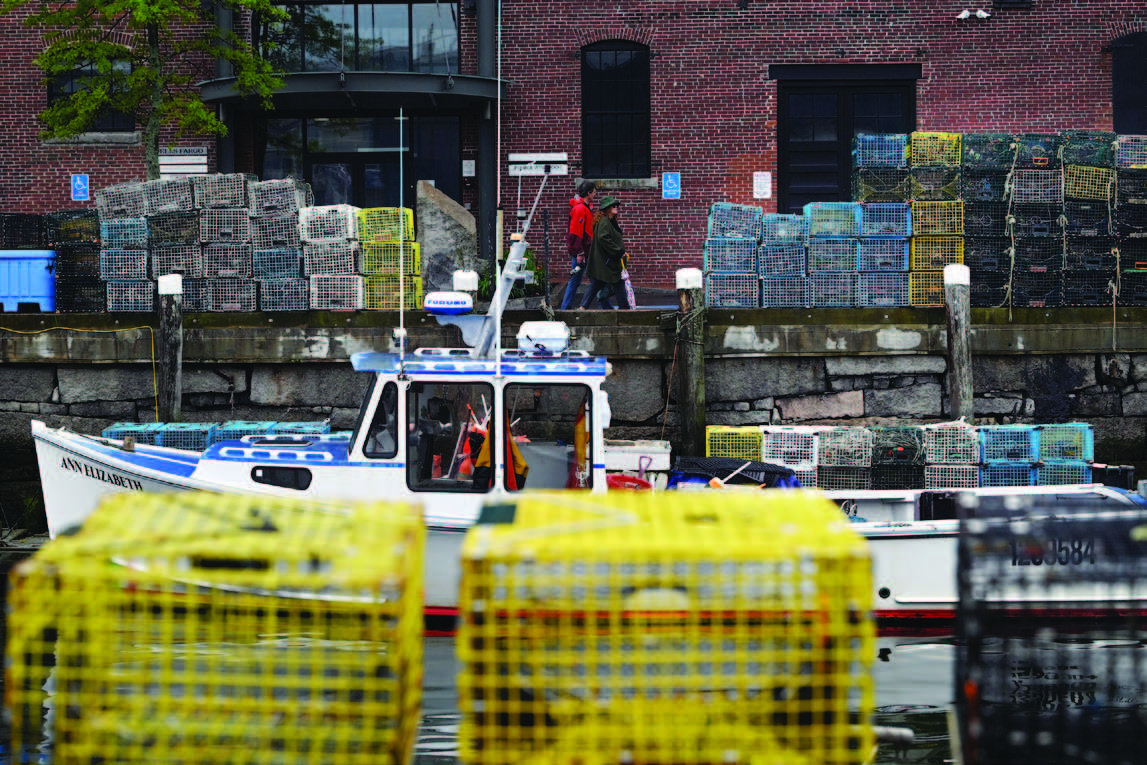
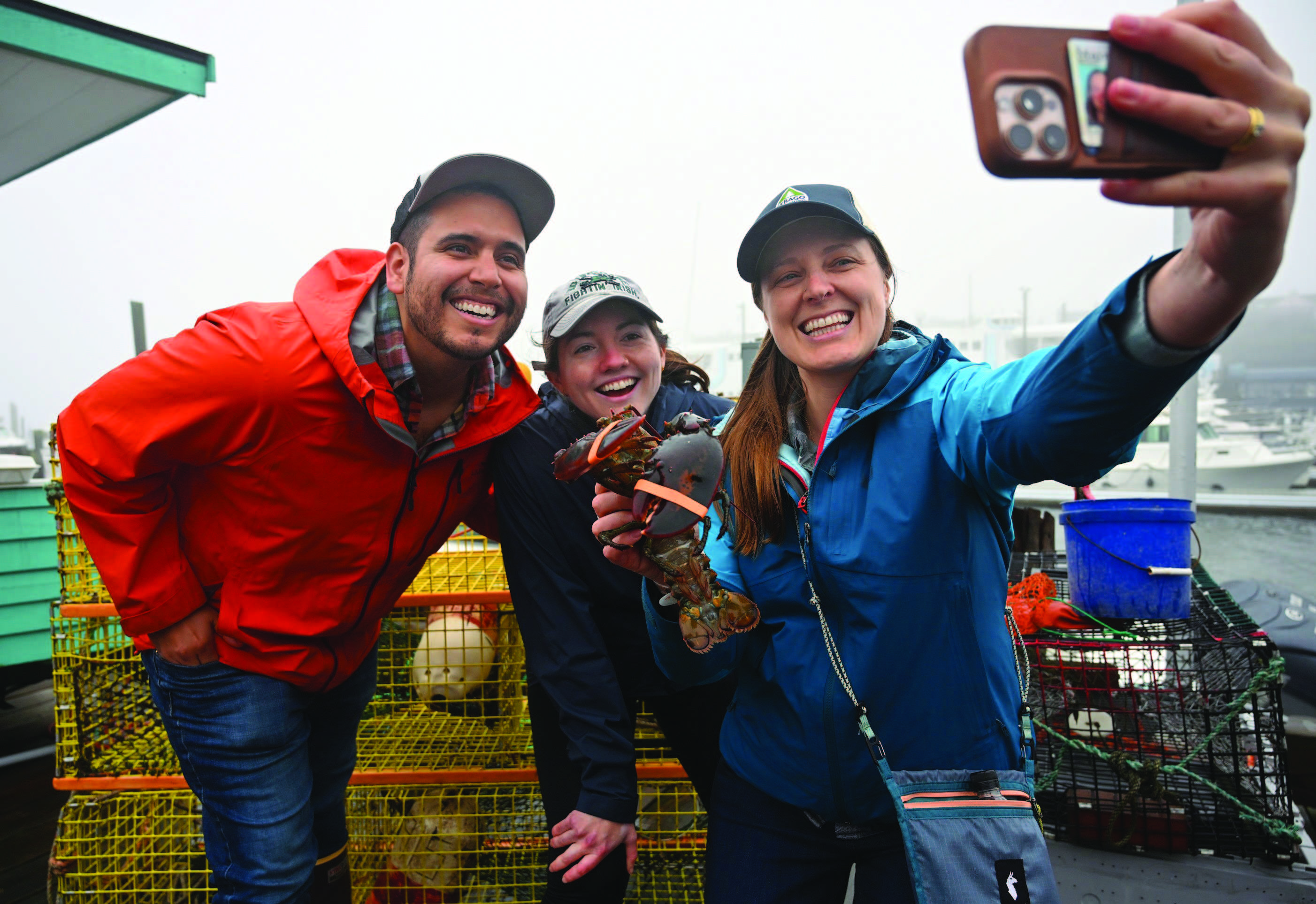


Ocean and seafood lovers braved the rain Saturday to celebrate Portland’s working waterfront culture during the 10th annual Walk the Working Waterfront event.
All along Commercial Street, people in rain jackets stopped by booths marked with orange flags, learned about lobster traps and aquaculture, and sipped samples of hot clam chowder.
“It’s a celebration of Portland’s protected waterfront,” said Katie Tims, an employee of the city of Portland’s Sustainability Office. “We’re preserving the working waterfront industry and how Portland became a prominent city.”
Originally, Walk the Working Waterfront started as a follow-up to Old Port Fest, but when the festival dissolved in 2019, the waterfront event continued on its own.
Each year, local businesses, fisheries and lobstermen open their doors and their boats to the public to share the culture of the Portland waterfront.
“I think it gives people a window into parts of Commercial Street that they don’t usually see,” Tims said. “There are fun restaurants, bars and shops, but it gives people an opportunity to walk down a pier that they don’t usually feel welcome walking down.”
Bangs Island Mussels, which grows mussels, kelp and oysters, was one of the businesses that opened its doors to the public Saturday.
For co-founder Matt Moretti, Walk the Working Waterfront was an opportunity for his company to not only showcase the work it does, but also to educate people on the importance of the working waterfront.
“It’s nice to get people in here to let them see what we do and everything that goes into a sustainable aquaculture company,” Moretti said. “I think for most people, what we do is a foreign concept. It’s hard to understand unless you actually see it.”
Moretti also noted the importance of sharing the benefits as the number of working waterfronts in Maine continues to shrink.
According to a 2020 study from the Island Institute, only about 20 miles of working waterfront remains along Maine’s 5,300 miles of coast.
“It’s no secret that the working waterfront is endangered,” he said.
In a state like Maine that relies heavily on the seafood industry as an economic engine, the preservation of working waterfronts is essential.
“We need the infrastructure of a working waterfront in order to be able to produce food for people,” Moretti said. “It’s all about access and education.”
Bangs Island Mussels was joined Saturday by organizations like the Maine Coast Fishermen’s Association, which works to enhance the sustainability of Maine’s fisheries by advocating for the needs of fishermen and the environmental restoration of the Gulf of Maine.
Mary Hudson, director of fisheries programs, said the organization’s members braved the rain to help raise awareness about building sustainable fisheries and vibrant fishing communities.
Maine residents and visitors were also happy to explore local businesses during Walk the Working Waterfront.
Portland resident Torie Hazelwood said she and her friends were inspired to attend the event because of a friend of theirs who works on the waterfront.
“It’s really cool,” Hazelwood said. “It’s a big part of the Portland scene.”
Like many others, Hazelwood and her friends said they appreciated the opportunity to explore a side of Portland that they rarely see.
Gulf of Maine Research Institute scientist Jay Kim said that’s what Walk the Working Waterfront is all about.
“People see what’s on the waterfront, but they feel disconnected from it,” Kim said. “We want to connect them.”
Sydney Richelieu — 207-689- 2851 srichelieu@metln.org