

Leah McDonald is a registered Maine guide, wilderness first responder and licensed clinical social worker. She lives in Cumberland.
On Wednesday, Aug. 12, my family and I hiked the iconic Tumbledown Mountain Loop trail in Weld. Like most Maine families, we have had a whirlwind summer filled with events, visitors and cherished summer traditions.
Every year we try and reserve one week to step away from the summer fray and enjoy the Maine wilderness — this one precious week always squeezed in between camps, work, preseason sports practice and the rush toward the beginning of school.
This year we came into our summer vacation week worn down by the constant cycle of bad news. My teenagers, husband and I had agreed to minimize screen time for this one short week in order to look up from our phones and focus on that which is good in life — time outside, time together and finding the humor and beauty in the everyday.
Our hike was difficult and fun — we had to lift our energetic yellow Lab up through the famous narrow rock “chimney” and even he, our adventurous up-for-anything dog, was trembling with adrenaline and excitement as we approached the summit of Tumbledown.
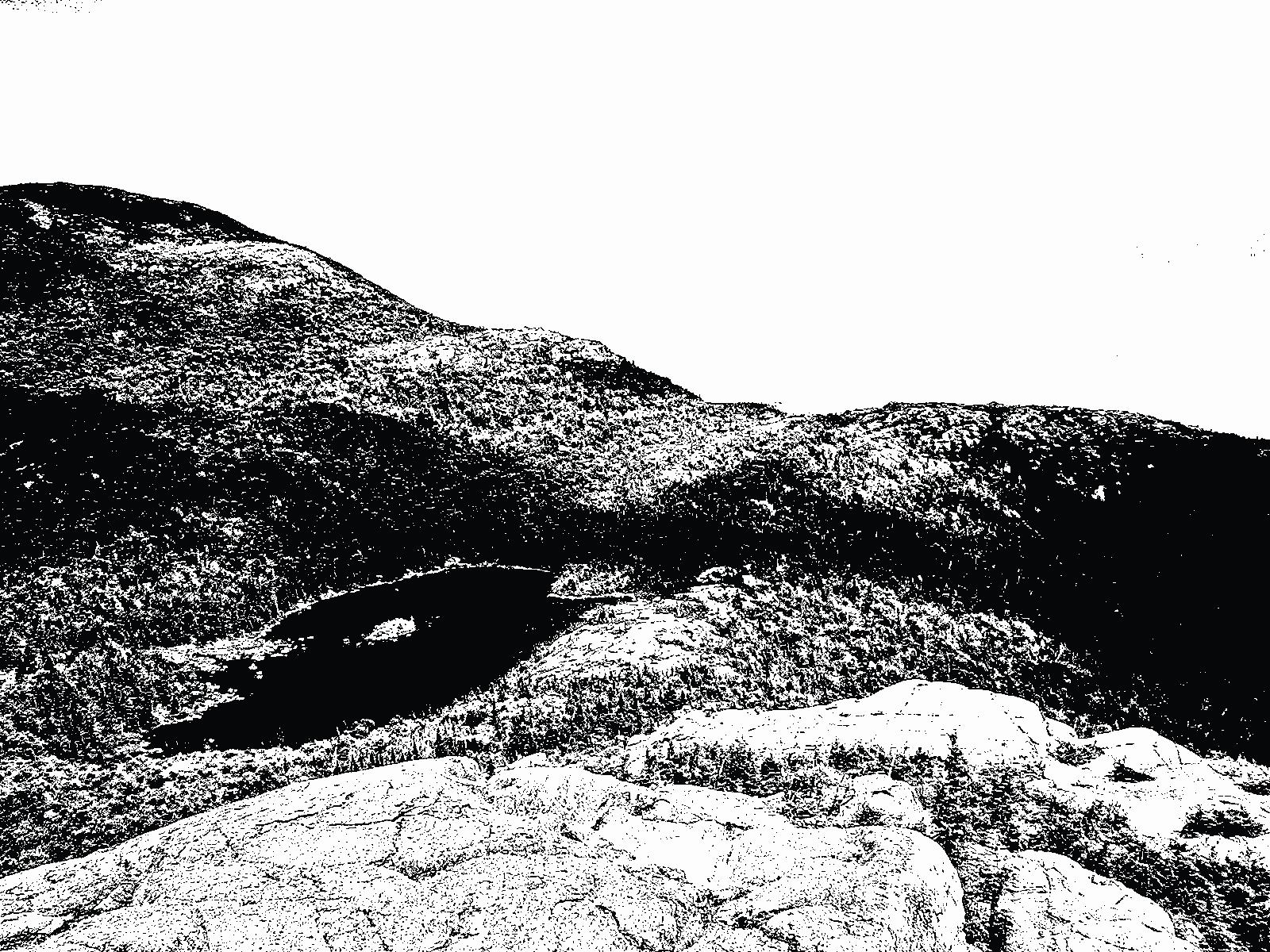
After eating a quick lunch, we took the requisite family selfies of our successful summit. The background of our pictures show the famous Tumbledown Pond nestled between the three peaks of Tumbledown Mountain. We could see and hear that there was already a significant crowd at the pond, and we decided to go ahead and change into our suits in the relative privacy of the summit.
We were looking forward to what most summer hikers of Tumbledown enjoy — a dip in the pristine alpine pond before hiking back down to the car.
As we approached the pond, we could see that many people were swimming out to the small island in the middle. It sounded to us like typical summer camp teenage fun — lots of laughter, screaming and splashing. Up until that moment, this day was absolute perfection: beautiful people on top of a mountain enjoying our shared treasure of Maine’s wild places. Strangers sharing a love of being outside on a warm summer day.
Strangers who, it turns out, were all really decent people willing to step in to help when crisis struck.
As we arrived at the shoreline, we realized that the screams from the swimmers were becoming desperate. We yelled out, “Does someone need help?” Someone yelled back, “Yes,” and we watched in horror as a group of teenagers dragged a limp person up onto the shore of the island. I quickly stripped down and jumped into the water to swim the several hundred feet to the island alongside three other hikers.
By the time I arrived, one person had started chest compressions and I began administering rescue breaths. As the others arrived, we quickly assessed the scene to try and understand what was happening. Who was this? What exactly happened here? How long had he been underwater? Wait, how many compressions to rescue breaths? Does he have a pulse? Open the airway, watch for the chest rising, calm down, calm down, calm down.
In a matter of seconds, we found ourselves in the situation no one ever wants to be in —shaking off the cobwebs of our CPR and medical training in a remote wilderness location, on a tiny island in the middle of an alpine pond.
This story is not about the details of what happened next, nor is it about the details of the young life that slowly slipped away from us on a pristinely beautiful day in Maine. Those details are painfully intimate, private and not mine to share.
What I can tell you is this: we communicated back and forth with people on the shoreline who were able to reach 911 via a satellite connection.
We were able to communicate that a helicopter would be necessary. We took turns doing CPR and scoured our collective minds to determine anything further that could be done.
Strangers came together to perform a million little acts of courage, support and kindness while the realization of the horror we were experiencing became clear. We performed CPR on that little island for over an hour. A Maine Forest Service helicopter eventually dropped two volunteer medics on island, blasting us with sand and water while we continued CPR (kudos to the extremely skilled young female pilot who made that magic happen).
We continued CPR for another 20 minutes while the medics slowly prepared us for what would need to happen next. What they don’t teach you in the classes is that the hardest part of performing CPR isn’t the exhaustion of the act itself, but rather the act of taking hands off the human being in front of you and stepping away.
By that point, there were 10 of us on the island and another 20-ish people on shore. We all knew what we were witnessing. Those of us on the island — strangers — stepped away from our task and stood in a circle surrounding this human, silent with shock. At that precise moment, the light quite literally dimmed, and we realized that the sun was partially obscured by a solar eclipse.
The world stopped, and that mountaintop swirled with love and love and grief and humanity and grief and love.
We didn’t leave quickly after that. The helicopter had to circle back several times to battle the rising winds and drop a game warden. The on-foot rescue team arrived on the shoreline.
We weren’t allowed to leave the island for some time while details were gathered. We finally swam back to shore to fall into the arms of our families and the strangers who had been helping from that side.
In the end, some of us hiked down together: a small, subdued group of strangers who had just collectively experienced the traumatic intimacy of loss. As we approached the trailhead, we could see the red flashing lights of the rescue vehicles through the trees and could hear the cacophony of voices and crackling radios of the ground rescue team.
But, stepping forward from where they were waiting, a somber group of young adolescent boys who had hiked down earlier were the first to greet us. Each one of them wanting — needing — to pay their respects.
This was their friend. They, too, had had their worlds flip upside down in a matter of seconds on top of that mountain. Every single boy stepped forward and hugged each one of us, saying “Thank you,” as earnestly as if we had just saved their friend’s life.
We weren’t able to save a life that day on Tumbledown. But every single one of us triedour hardest. All of us strangers who happened to be on a mountaintop in Maine under apartial solar eclipse — we tried so hard and poured all of our love and faith and power into the trying.
We came together, we did our very best with what we had, and together we experienced the devastation and beauty of what it is to be human on this Earth together.